Signs It's Time to Replace Your Front Door
Doors rarely fail all at once. In South Florida they send warnings first, and most of them are easy to spot.
October 14, 2026 · 4 min read
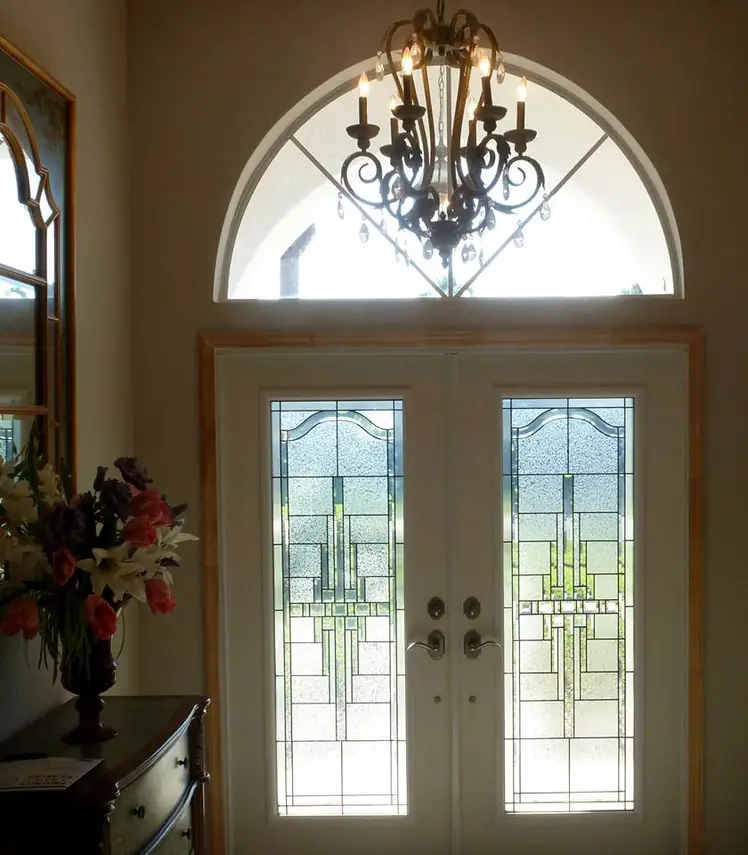
Your front door does more work than any other part of your house. It takes the afternoon sun, the summer downpour, the salt that rides in on the east wind, and a few thousand openings and closings every year. In Palm Beach County it also has to hold up against the possibility of hurricane-force wind each season. Doors don't usually fail all at once. They give you hints first, and the hints are easy to read once you know where to look.
Water where it doesn't belong
Check the bottom of the door and the threshold after a hard rain. A damp sill, a dark stain on the floor just inside, or a swollen bottom edge on a wood door all mean water is finding a way in. Sometimes a fresh bead of sealant and new weatherstripping solve it. But if the slab itself has soaked up moisture, it won't go back to the way it was. Wood swells, shrinks, and cracks, and once that cycle starts you're chasing a problem that keeps coming back.
Soft spots in the frame
Press a thumb into the lower corners of the frame and the jamb. If the wood feels spongy, or the tip of a screwdriver sinks in, there's rot hiding behind the paint. Humidity is the slow culprit. South Florida air holds moisture all year, and a frame that never fully dries out breaks down from the inside. A door can look fine from the street and still be soft where it meets the ground.
Frame rot is a bigger conversation than a worn slab. A new door hung in a bad frame will be crooked within a year. If the frame is compromised, replacing the whole opening is usually the honest answer, so ask whoever looks at your door to look at the frame too, not only the slab.
Light around the edges
Close the door at night with the lights off inside and look for a thin line of daylight, or have someone shine a flashlight along the edge from the other side. Gaps at the top, along the latch side, or under the sweep mean the door has moved, the weatherstripping has gone flat, or the slab has warped. A small gap can often be adjusted. A gap that changes with the seasons usually means the door itself is moving, and that points to age or moisture.
Sticking, rubbing, and sagging
Most Florida homeowners know the summer stick: the door drags in July and loosens up in January. A little seasonal movement is normal. These are the signs that it has gone past normal:
- The door rubs the frame at the top corner on the latch side, which means it's sagging on its hinges.
- You have to lift the handle or shoulder the door to get the deadbolt to catch.
- The hinge screws keep loosening, even after you've tightened them.
- You've sanded or planed the edge more than once, and it's sticking again.
Tightening hinge screws and nudging the strike plate buy time, and we'll cover that in our post on front door service. But when the fix only lasts a few weeks, the door is telling you the trouble is bigger than the hardware.
Tired hardware and cloudy glass
Salt air eats metal. Look at your handle set, hinges, and lock. Pitting, flaking finish, green or white crust, and a lock cylinder that turns stiffly are all corrosion at work. New hardware can refresh a good door, and our door hardware page at /services/door-hardware shows what's available. If the door is also showing other problems, replacing the whole thing makes more sense than dressing up a failing slab.
Glass tells its own story. Fog or droplets trapped between the panes of an insulated unit mean the seal has failed. Loose or cracked decorative glass, or leaded caming that has started to bow, will only get worse with the heat cycles on a sun-baked entry.
A door that no longer feels secure
If the door flexes when you lean on it, if the slab is thin and hollow-sounding, or if the frame shows splits around the strike, you're relying on a door that's past its working life. Hurricane season sharpens the question. An older entry with a thin skin and limited latch points is often the weakest part of a house in a storm. Many homeowners around West Palm Beach choose to replace an aging entry with a door built for storm conditions. Ask the installer exactly what the door is built to resist, and ask to see the construction in person, not just on a brochure.
It simply looks worn out
Sun fades paint and stain quickly in this climate. If you've repainted the door twice in a few years and it still looks tired, that's a signal too. Fiberglass doors don't swell and shrink the way wood does, and they're available with wood-grain finishes, glass panels, and custom designs. Strictly Doors carries Plastpro fiberglass doors, among other brands, and you can see samples in the showroom on Okeechobee Blvd.
What to do next
If two or three of these sound familiar, start with a quote. Strictly Doors gives free quotes within 24 hours, and you don't need an in-home estimate to get one. Our front doors page at /services/front-doors shows the styles we install, and if you're thinking about storm protection for the rest of the house, /services/impact-windows covers the windows side. When you're ready, call (561) 414-2089 or send a note through /contact. Every installation is done by our own team, never subcontracted, and backed by a 1-year labor warranty.
Strictly Doors Inc, (561) 414-2089
Call (561) 414-2089More articles
How to Choose the Right Residential Exterior Door Company
A good door in the hands of a bad installer is still a bad door. Here's how to judge the company before you judge the product.
4 Questions to Ask Your Exterior Door Company Before Hiring
You don't need to be a contractor to vet one. Four questions, asked early, tell you most of what you need to know.